
Randolph County Court Records After Arrest
The local path is arrest, booking at Randolph County Jail, first court or pretrial processing, prosecutor review, and public docket activity through the Randolph County Circuit Clerk, Judici, or re:SearchIL. Randolph County is in the 24th Judicial Circuit. The Circuit Clerk is the public court-record office for case information, official copies, filings, traffic payment directions, and courthouse record access. The State's Attorney is the charging office that decides which formal criminal charges to file after an arrest.
Do not treat a roster charge as a conviction. The roster is a custody and booking source. For the current jail listing and booking detail, use Randolph County jail inmate records. For booking photos, use Randolph County jail mugshots. Court records after a jail arrest are the case events that follow: filings, charge changes, bond or detention orders, court dates, warrants, pleas, dismissals, sentences, and sealed or expunged outcomes.
The image manifest includes the Circuit Clerk page that points users to court case information. The source is the Randolph County Circuit Clerk.
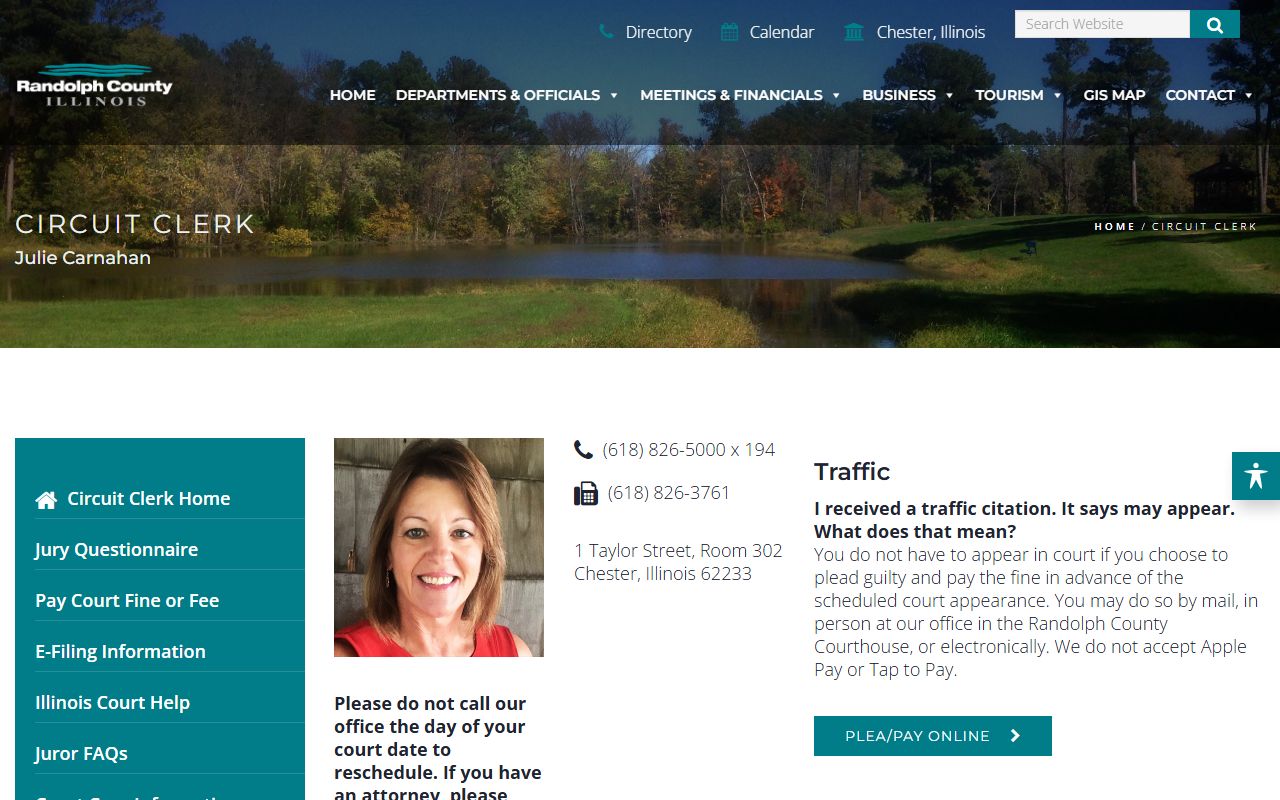
The clerk page is the official county route for local case information and courthouse contact details.
Find Randolph County Court Records
The Randolph County Circuit Clerk page links court case information to Judici, and statewide electronic court-record access is also available through re:SearchIL. Online access may lag behind a jail booking. If a person appears on the jail roster but no court case appears yet, the case may not be filed, indexed, or visible through the online portal. For official copies, use the Circuit Clerk rather than saving a screenshot from a web portal.
- Start with the jail roster only to confirm custody and read the booking charge text.
- Open Judici Randolph County case search from the Circuit Clerk's court case information path.
- Search by defendant name or case number when available. Try name variants because the roster format may differ from the court docket format.
- Review case type, filing date, charge descriptions, hearing dates, disposition, and bond or pretrial orders.
- Use re:SearchIL for statewide or cross-county court-record access when permissions and account access allow.
- Contact or visit the Circuit Clerk for official copies or when the online record does not resolve the question.
| Search path | Public field detail from research | Use it for |
|---|---|---|
| Judici case search | Randolph County endpoint uses court code IL079015J; captcha or login notices may appear. | Local public docket searches by name or case number when accessible. |
| re:SearchIL | Statewide secure court-record portal; exact public fields were not fully inspectable without interactive access. | Cross-jurisdiction electronic court records. |
| Circuit Clerk | Counter and mail access through 1 Taylor Street, Room 302, Chester, IL 62233. | Official copies, payment questions, and record help. |
| Archive links | Forms page lists older civil and criminal court archive indexes. | Historical records, not current jail-arrest cases. |
Judici And re:SearchIL Records
Judici is the local case-search path named by the county. It may ask for a captcha or other on-screen verification, so automated capture may not show every field. A person doing a Randolph County court records after arrest search should complete the browser check and then search by the best available name spelling or case number. The court record may show the formal charge list, filing date, hearing entries, bond or pretrial order notes, and disposition when the case has reached that stage.
The manifest screenshot below comes from Judici Randolph County case search.
Judici is useful for the local case docket, while re:SearchIL provides a broader statewide court-record route where access is available.
The statewide portal source is re:SearchIL.
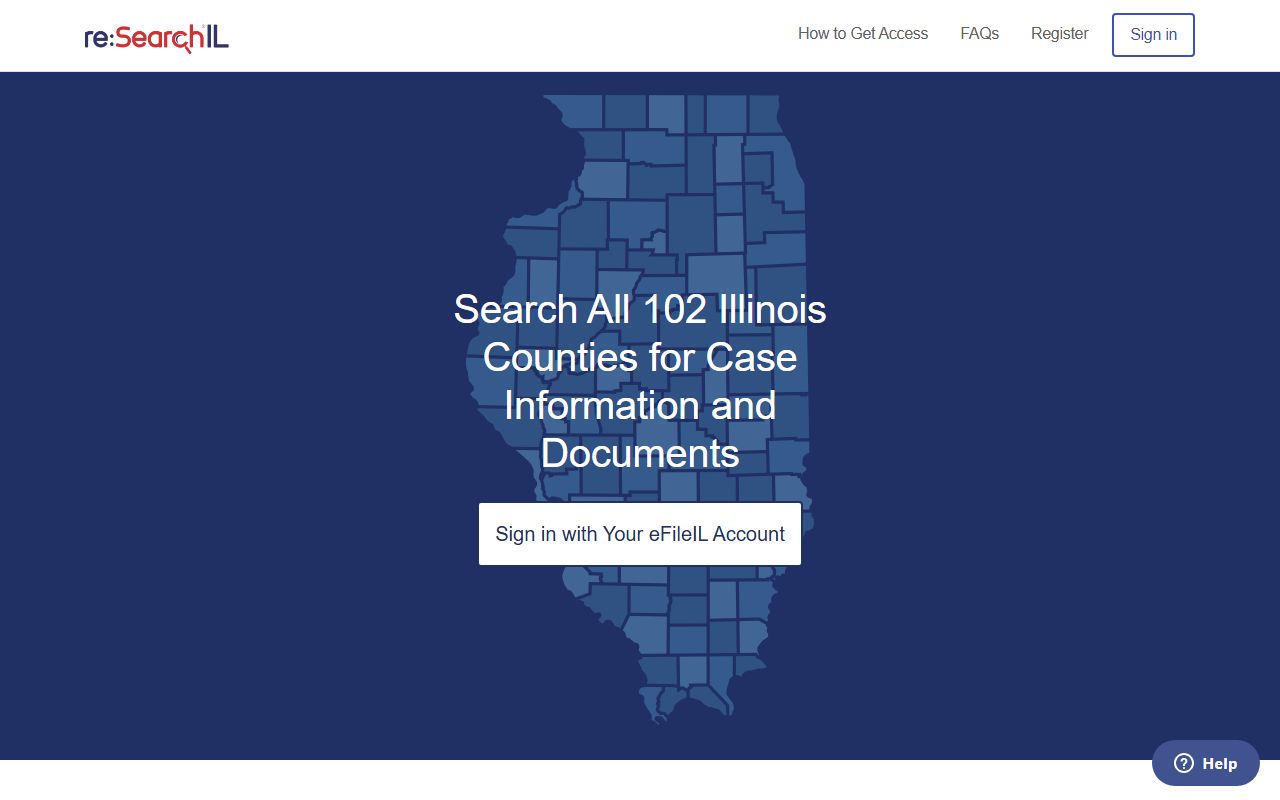
Use re:SearchIL for statewide court-record access, but keep official-copy requests with the clerk that maintains the case.
Prosecutor Filing After Arrest
The Randolph County State's Attorney is Christopher Koeneman. The office handles felony, misdemeanor, traffic and DUI offenses, juvenile matters, and legal-advisor work for the county. For a jail-arrest case, the State's Attorney screens the facts and files, amends, reduces, or dismisses charges as the case moves. The Circuit Clerk does not create the prosecution; the clerk maintains the public docket and official case file after filings are made.
That split explains why the jail roster and court records after a jail arrest can disagree. A booking charge may reflect the arresting agency's intake label. The court charge may later be filed as a complaint, information, or indictment. A charge may also be amended, reduced, dismissed, or followed by a plea or sentence. The formal status appears in the court case, not in the jail roster photo block.
| Charging document | Who uses it | What it does |
|---|---|---|
| Complaint | Often officer or prosecutor initiated. | States the accusation and can start a criminal case after arrest. |
| Information | Filed by the prosecutor. | Sets out formal charges without a grand-jury indictment where allowed. |
| Indictment | Returned through grand jury process. | Charges more serious matters or cases presented to a grand jury. |
Randolph County Charge Status
Charge status is the current posture of a count in the court record. It is not the same thing as custody status on the jail roster. A person can be released while charges remain pending, or held while a case is still waiting for the next hearing. Court records after a Randolph County arrest should be read count by count because one case can have multiple charges with different outcomes.
| Status | Meaning in a court record |
|---|---|
| Pending | The charge is filed and not yet resolved. |
| Amended | The charge language, level, or count has been changed by later filing or order. |
| Reduced | The filed charge is lowered to a lesser count or level. |
| Dismissed | The court or prosecutor has ended that charge without a conviction on that count. |
| Nolle prosequi or State dismissal | The prosecutor declines to continue that charge, subject to the case record and law. |
| Disposition or sentenced | The case or count has reached an outcome, such as plea, finding, sentence, probation, or other order. |
| Transferred | The matter moved to another court, case, or jurisdictional track. |
Bond And Pretrial Terms
Illinois pretrial release changed through the Pretrial Fairness Act, so Randolph County arrest records should not be read through old cash-bail assumptions. The roster terms observed locally include Held without Bond, Must see Judge, No Bond Posted, and blank cells. Those are status clues, not a fee schedule. The Circuit Clerk page also lists a Pretrial Services Officer, which confirms a local pretrial-services path for court supervision and release terms.
| Roster or court term | Practical meaning |
|---|---|
| Held without Bond | No payable release amount appears in the roster; check the court case and call the jail. |
| Must see Judge | Judicial review or first appearance is needed before release terms are known. |
| No Bond Posted | A release condition or payment may exist, but nothing qualifying is shown as posted. |
| Blank bond cell | No bond detail was published in that row; do not infer release eligibility. |
| Pretrial supervision | Court-ordered conditions may apply after release, such as reporting, no-contact terms, travel limits, or treatment. |
Warrants After Randolph County Arrest
No official Randolph County public warrant-search portal was located. The Sheriff's Office processes warrants, mittimuses, subpoenas, and other civil or court papers, and the annual report says telecommunicators entered arrest warrants and orders of protection into the state database. A warrant can lead to a jail booking, and an observed roster charge line included a Randolph County warrant reference. For active questions, use the Sheriff's Office phone or in-person path, then check the court docket for bench warrants, failure-to-appear entries, and pretrial orders.
Charges Versus Convictions
The key rule for court records after an arrest is simple: a charge is an accusation, while a conviction is an outcome after a plea, finding, or verdict. The public may see both in a court docket, but they do not mean the same thing. A charge can be pending, amended, dismissed, or replaced before final disposition.
| Point | Charge | Conviction |
|---|---|---|
| Stage | Filed accusation after arrest or prosecutor review. | Final or court-entered outcome after plea, verdict, or finding. |
| Proof | Not proof of guilt. | Reflects a legal finding or admitted offense. |
| Where seen | Jail roster as booking text and court docket as formal count. | Court docket, sentencing entry, and some criminal-history records. |
| Can change | Yes, it can be amended, reduced, added, or dismissed. | Changes usually require later court action or post-judgment relief. |
Sealed And Expunged Records
Illinois FOIA and court-access rules do not make every arrest record permanently visible in the same way. Juvenile records are treated differently, and some adult records may later be sealed or expunged if the person qualifies and obtains a court order. Sealing generally hides a record from broad public access while leaving limited access for law enforcement or authorized users. Expungement is a stronger remedy that can remove or treat an eligible record as legally cleared, subject to the order and Illinois law.
| Issue | Sealed | Expunged |
|---|---|---|
| Public view | Restricted from ordinary public access. | Removed or treated as cleared under the court order. |
| Government access | Some agencies may retain limited authorized access. | Access is more limited and depends on the order and law. |
| Best use | Cases eligible for public-view restriction. | Eligible arrests, dismissals, acquittals, or other qualifying outcomes. |
| Where to start | Use court records and Illinois expungement resources linked by local officials. | Use the court case and seek the proper court order. |
Note: A private background check or casual web search should not be used as a substitute for an official court record or a legal expungement review.
Restricted Court And Arrest Records
Illinois FOIA, 5 ILCS 140, is the general public-records law, but exemptions still apply. FOIA Section 2.15 covers arrest-report and criminal-history concepts, and Public Act 100-0927 changed booking-photo language for certain law-enforcement social media posts. Juvenile records also have confidentiality rules. For Randolph County, the plain access split is this: use the jail roster for current custody, Judici or re:SearchIL for court charges and case events, the Circuit Clerk for official copies, and county FOIA for records that are not posted online.